


Welding expert Fu Jing takes you to analyze the advantages and disadvantages of tin-lead solder.
Release time:
2022-10-27
【Summary Description】 Traditional tin-lead solder has been used as a standard material for connecting components and printed circuit boards due to its low cost, easy soldering, beautiful forming, good physical, mechanical and metallurgical properties, and has formed a complete set of use processes, which has been favored by electronic merchants for a long time. Studies have shown that Pb plays the following important roles in Sn Pb solders: (1) reduce the surface tension, is conducive to infiltration; (2) can prevent the occurrence of tin plague, the so-called tin plague refers to the occurrence of a phase change from free tin (G-Pb) to gray tin ((Z-Pb) below 13 degrees C, resulting in the volume expansion of 26; (3) The rapid formation of the bond between the solder and the soldered member is promoted. Although lead-tin solder has so many advantages, because lead is a highly toxic substance, long-term use of lead-containing solder will bring serious harm to human health and living environment. Therefore, the voice of restricting and prohibiting the use of lead-containing solder is increasing. Governments have formulated corresponding regulations to restrict the use of materials and waste disposal of electronic products, making the environmental friendly requirements of electronic packaging have become a global trend. In addition, lead-free technology due to the difference of solder and the adjustment of welding process parameters, it is necessary to bring some influence on the reliability of solder joints. The SMT and MCM solder joints directly realize the electrical and mechanical connection between heterogeneous materials (mainly under shear strain), and their quality and reliability largely determine the quality of electronic products. Therefore, the reliability of lead-free solder joints has been paid more and more attention.
Traditional tin-lead solder has been used as a standard material for connecting components and printed circuit boards due to its low cost, easy soldering, beautiful forming, good physical, mechanical and metallurgical properties, and has formed a complete set of use processes, which has been favored by electronic merchants for a long time. Studies have shown that Pb plays the following important roles in Sn Pb solders:
(1) reduce the surface tension, is conducive to infiltration;
(2) can prevent the occurrence of tin plague, the so-called tin plague refers to the occurrence of a phase change from free tin (G-Pb) to gray tin ((Z-Pb) below 13 degrees C, resulting in the volume expansion of 26;
(3) The rapid formation of the bond between the solder and the soldered member is promoted.
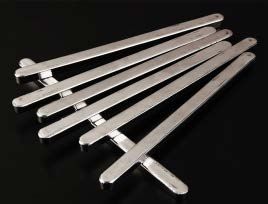
Although lead-tin solder has so many advantages, because lead is a highly toxic substance, long-term use of lead-containing solder will bring serious harm to human health and living environment. Therefore, the voice of restricting and prohibiting the use of lead-containing solder is increasing. Governments have formulated corresponding regulations to restrict the use of materials and waste disposal of electronic products, making the environmental friendly requirements of electronic packaging have become a global trend. In addition, lead-free technology due to the difference of solder and the adjustment of welding process parameters, it is necessary to bring some influence on the reliability of solder joints.
The SMT and MCM solder joints directly realize the electrical and mechanical connection between heterogeneous materials (mainly under shear strain), and their quality and reliability largely determine the quality of electronic products. Therefore, the reliability of lead-free solder joints has been paid more and more attention.
Related News

Telephone:+86-18594983359
E-mail:Firmkim@cn-huaguang.com
Zip Code: 311112
Address: No. 82, Qihang Road, Renhe Street, Yuhang District, Hangzhou City, Zhejiang Province

Douyin QR code

We chat number

WeChat public account