


07-07
→Laser welding is a high-precision and high-efficiency welding method.
2023-07-07
Laser welding is a high-precision and high-efficiency welding method, which has been widely used in industrial manufacturing. Laser welding uses a high-energy laser beam to heat the Welding materials of the workpiece to a molten state, which is welded by surface tension and conduction heat dissipation. Laser welding has many advantages. First of all, due to the strong focusing ability of the laser beam, extremely high energy density can be achieved, thereby achieving rapid melting and deep welding. Secondly, the heat-affected zone generated during laser welding is very small, leaving almost no obvious traces, and there is no need for secondary treatment after welding. In addition, since the laser welding only heats the welding part and does not cause thermal damage to the surrounding materials, the problems of material deformation and cracks can be avoided. Laser welding is suitable for welding various materials, including metals, plastics, ceramics, etc. In metal welding, laser welding is widely used in automobile manufacturing, aerospace and other industries. Compared with traditional arc welding, laser welding has the advantages of fast speed, high weld quality and small welding deformation, which greatly improves the production efficiency and product quality. However, laser welding also has some challenges and limitations. First of all, laser welding equipment is expensive and requires highly specialized operators to operate and maintain. Secondly, there are some limitations in the choice of materials, and some highly reflective materials are difficult to achieve the ideal welding effect. In addition, laser welding requires high treatment of the welding surface, such as the removal of oxide layers, coatings, etc. In order to better apply laser welding technology, we need further research and development. First of all, it is necessary to develop laser welding equipment that is more adaptable to different materials and application scenarios to meet various needs. Secondly, it is necessary to strengthen the monitoring and control of the laser welding process to ensure the stability and consistency of the welding process. Finally, it is necessary to continuously improve the welding process, reduce costs, improve efficiency, and promote the wide application of laser welding technology. In short, laser welding is a high-precision and high-efficiency welding method, which has many advantages and application prospects. Through continuous research and development, it is believed that laser welding technology will play an increasingly important role in industrial manufacturing.
07-06
→Several common metal materials to form a strong connection process
2023-07-06
Metal material is one of the important materials in industrial manufacturing, widely used in construction, manufacturing, aerospace and other fields. In practical applications, metal materials often need to form a firm connection to ensure the stability and service life of the structure. The following will introduce several common metal materials to form a firm connection process. First is the welding process. Welding is a process that forms a strong connection by melting the surface of a material. During the welding process, the metal material is heated to a high temperature to melt its surface, and molten metal or filler is added for filling. Subsequently, during the cooling process, the metal material re-solidifies, forming a strong connection. Welding can be divided into gas welding, arc welding, laser welding and other types, each type has its specific application occasions. Followed by the riveting process. Riveting is the use of rivets or riveted bolts to form a connection by fixing metal materials together. Riveting is generally suitable for connecting parts that need to withstand greater tensile strength. In the riveting process, rivets or riveting bolts are inserted into pre-drilled holes and the connection is formed by hammering or rotating. Riveting has the characteristics of firm connection and vibration resistance, and is widely used in automobiles, aircraft and other fields that require high-strength connections. In addition, the threaded connection is also a common firm connection process for metal materials. Threaded connection is the use of thread bite each other to form a connection, with the characteristics of self-locking. In the threaded connection process, the parts are drilled and cut the thread, and then the threaded hole and the threaded rod are engaged by rotation. Threaded connections are suitable for connections that are subjected to large shear or rotational forces, such as bearing connections in mechanical equipment. Finally is the welding adhesive process. In this process, the metal materials of the welded portion are bonded together by an adhesive. Adhesives are usually composed of special chemicals that can form a strong chemical bond with the metal surface. This process has the characteristics of not destroying metal materials, and is suitable for situations where traditional welding cannot be carried out, such as connecting special metal materials or on deformable metal surfaces. In summary, metal materials to form a firm connection of the process of welding, riveting, threaded connection and welding adhesive. When selecting the appropriate process, it is necessary to consider the characteristics of the material, the mechanical requirements of the connection site, and the operability of the process to ensure the stability and reliability of the connection.
07-05
→Welding, a process in which metal materials form a strong connection
2023-07-05
Metal welding is a common metal processing technology, widely used in industrial fields. It is a process of heating metal materials to a plastic state, and then using external forces or other auxiliary materials to form a firm connection of metal materials. Metal welding has the following main applications: 1. Manufacturing field: Metal welding plays a vital role in the manufacturing industry. It can be used to manufacture machinery and equipment, automobiles, aerospace equipment and other products. For example, in automobile manufacturing, metal welding can be used to weld the body and chassis to ensure a strong vehicle structure and improve safety performance. In aerospace manufacturing, welding technology is applied to the connection of aircraft structures and engine components to ensure the safe flight of aircraft. 2. Construction industry: metal welding is also widely used in the construction industry. For example, in the construction of steel structures, welding can be used to connect a large number of steel pieces to form a stable frame structure and improve the strength and durability of the building. In addition, metal welding can also be used to manufacture and repair piping systems, iron doors and windows and other building materials. 3. Shipbuilding: Metal welding plays an important role in shipbuilding. Through welding technology, a large number of steel pieces can be welded into a complete hull structure. In addition, in the process of ship maintenance and modification, metal welding is also often used to repair the damaged parts of the hull and extend the service life of the ship. 4. Petroleum and chemical industry: In the petroleum and chemical industry, metal welding is essential. It is widely used in the construction and maintenance of piping systems and storage tanks. Welding technology can ensure the tightness of the pipe connection, so as to avoid the leakage of liquid and gas, and ensure the safety and reliability of the production process. In short, metal welding has important application value in various fields. With the continuous progress of science and technology, welding technology is also constantly developing and innovating. It not only improves product quality and process efficiency, but also promotes the development of various industries. It is believed that with the passage of time, metal welding technology will continue to develop and play a greater role in the future production and life.
06-28
→2023-06-28
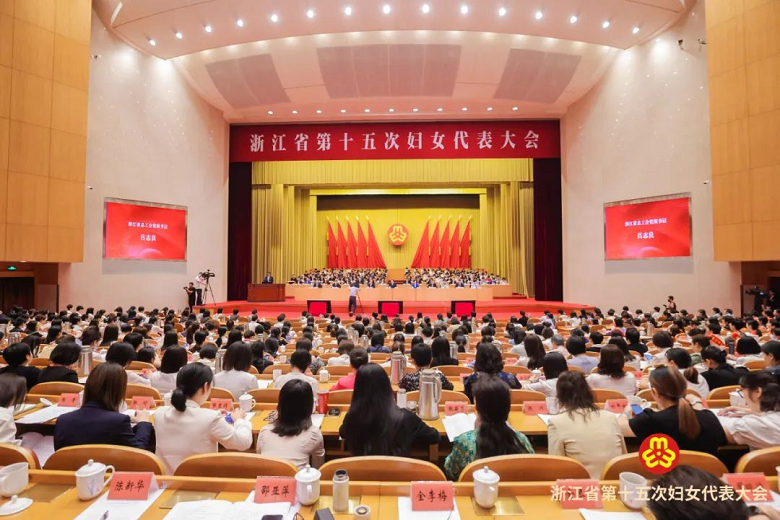
From June 19 to 21, 2023, the 15th Women's Congress of Zhejiang Province was successfully held in Hangzhou. Yi Lianhong, Secretary of the Zhejiang provincial Party committee and director of the Standing Committee of the provincial people's Congress, attended the opening ceremony and delivered a speech, encouraging and requiring women in the province to show their true colors, responsibilities, elegant demeanor and temperament from four aspects: political thought, innovation and entrepreneurship, core values, and knowledge and cultivation. Wu Haiying, vice chairman of the All-China Women's Federation and secretary of the Secretariat, attended the meeting to congratulate and deliver a speech, proposing that the majority of women should be an example of deeply learning and practicing Xi Jinping's new era of socialism with Chinese characteristics, and be an example of uniting and mobilizing women to promote Zhejiang's "two firsts". Be an example of cultivating and practicing the core values of socialism, be an example of implementing the basic national policy of equality between men and women and men, and men, and men, and women's. The person in charge of the Zhejiang Provincial Federation of Trade Unions delivered a congratulatory message on behalf of the group organization. He Xingren, president of the Provincial Women's Federation, made a work report entitled "uniting the strength of women, gathering the wisdom of women to create an" important window "to write a chapter of Chinese-style modernization in Zhejiang." this paper summarizes the achievements made in Zhejiang's women's cause, women's development and the work of women's federations in the past five years, it plans the focus of work in the next five years in the implementation of the five major aspects of women's common heart, women's co-creation, women's beauty, women's co-construction, and women's union.
03-13
→How to hot melt welding pe pipe
2023-03-13
Heat welding how to hot melt welding pe pipe The use of pe pipe is very extensive, play a very important role. How can pe pipes be hot melt welded? Let's take a look at it PChouse. First of all, the two PE pipes are placed on the hot melt fixture, and the other side of the water pipe is placed on the bracket to keep it level. Then cut the pipe end flat and add an electric heating plate in the middle of the pipe. Then heat the electric heating plate to make the pipe surface and the electric heating plate closer. Finally, the pressure can be buried in the soil. The main ways are as follows: 1. Hot melt docking When PE pipes are hot-melted and butted, the pipe ends are heated by a welding machine first. After the pipe ends are melted, the two pipes are quickly bonded, and the melting effect can be achieved after cooling. 2. Electric fusion connection PE pipe connection can also be made by electric melting, that is, the pipe fitting is sleeved on the pipe, and the resistance wire on the surface of the pipe fitting is heated by electric melting machine. After a certain amount of heat is reached, the pipe fitting and the surface of the pipe fitting will be melted into one body to achieve the purpose of welding. 3. Saddle butt joint For water pipe connection, if the main pipe is connected, the traditional method is to cut off a section of the main pipe and then connect the three links to tap, which is complicated. However, the saddle-shaped docking method is relatively simple and convenient. It is only necessary to connect a saddle-shaped pipe fitting to the main pipe and weld it with a welding machine. hot melt water pipe welding method skills? 1, do a good job of inspection before installation, to prepare plugs, sockets, as well as wires, including drag plate. In addition, it is necessary to check that the fuser is not loose or damaged, and at the same time, the pipe should be prepared. It is best to choose the same brand. 2. Next, turn on the hot melt machine, it will have an indicator light, the red light means heating, and the green light means constant temperature. Then remove 4~5cm from the port of the water pipe, put the port of the pipe into the heating film sleeve of the machine, and insert it into the marked depth before heating. 3. When a certain period of time is reached, the pipe is removed from the heating mold, and quickly and evenly inserted into the newly melted joint, while rotating. 4. Finally, the hot-melt water pipe should be welded. After cooling, it should be checked and accepted. If the family wants to decorate the water pipe, it is best to choose ppr water pipe, which is relatively cost-effective and is the preferred material for home improvement water pipe. 1. When selecting ppr water pipes, different pressure bearing degrees need to be selected according to the pressure of tap water, some are 1.6MP and some are 2.0MP. Some of its pipe walls are thicker and some are thinner, so the pressure bearing capacity is also different. The pipe wall used by the family should choose 2.3 or 2.8 pipes, and the pressure should reach 1.6MP, which can meet the needs of the family. 2. When purchasing ppr water pipes, you should also pay attention to other accessories, three-way valves, elbows, etc., which should be selected according to the number of water pipes. To prevent insufficient laying time, run another trip later. The above content specifically introduces the specific method of heat capacity pipe welding and how to choose and buy if the pipe is ppr. As a family laying pipes, we must pay attention to the material of the pipe is very important, and the welding skills are very important, in order to ensure that the problem of water leakage will not occur in the later period.
03-12
→2023-03-12
Cast iron welding How to weld cast iron When it comes to cast iron welding rod, we must all know, because we often encounter the fracture of the machine base and cover in our life. At this time, we need to use cast iron welding rod to weld the broken part. Xiao Bian, now let's give you a specific introduction to the welding methods and precautions of cast iron welding rods. One. Thermal welding method of cast iron electrode The so-called thermal welding method is to heat the cast iron welding rod for welding. First of all, before welding, we will heat all the objects to degrees. During the welding process, the temperature of the whole welding part cannot be lower than degrees. But after welding, we can wait for it to cool down. The method of thermal welding is generally gas welding and electric welding, and the tools needed are hot furnaces and Welding tools. The process is generally as follows: the first is to preheat, clean the entire welded parts until the metal is exposed, and then put them into the furnace for heating. After that, welding is carried out. Generally, neutral flame welding is used. When the metal is melted through, the welding rod is put in. Then when white spots appear, the welding agent is put in. The welding agent must be put in an appropriate amount, and then welding is carried out. But in the process of welding should pay attention to the weld smooth. Finally, it is good to cool down. During the cooling process, pay attention to the cover plate to avoid cracks. II. Cold welding method of cast iron electrode The welding method of cold welding is generally electric welding. The first step of cold welding and hot welding is the same. First clean up until the metal is exposed, and then start welding. During the welding process, both the electrode and the current should be as small as possible to avoid wasting the electrode, and it is best to keep the current stable during the welding process, and do not affect the welding because of the temperature. When welding, it is best to follow the principle of first inside and then outside, spread the welding, and weld the second layer after welding the first layer. It is best to check whether there are any pores or cracks left during welding. It is good to weld carefully in this way. Besides. Three. Welding Precautions First of all, one of our more important points is that in the process of welding, we must first clean up the sundries on it. For the hot welding electrode, we must also remove the oxide on it. The second is to pay attention to, when welding cracks, pay attention to observe the shape of the cracks and so on, choose a good electrode, and one more thing is, if you choose cold welding, you should preheat it first, then choose the appropriate current, and keep the current stable. The welding method of cast iron welding rod is probably like this, but whether it is hot welding or cold welding is a very dangerous process, we should pay attention to safety in the process of welding, but also pay attention to the matters needing attention when welding. The above is a brief introduction to the welding method of cast iron welding rod, hoping to help everyone!
03-11
→What method is used to minimize welding deformation?
2023-03-11
Reduce welding deformation What method is used to minimize the welding deformation of two welds of 15-meter-long channel steel? 1. two welds of 15 meters long channel steel, the host did not give the welding form, position, length, leg height and structure of the weldment. We are just exploring what method to use to minimize welding deformation. 2. the following, we mainly discuss several common methods to prevent or reduce welding deformation: 1. Anti-deformation method When assembling before welding, the amount of deformation in the opposite direction is preset to offset (compensate) welding deformation. This method is called Anti-deformation method. 2. Use assembly and welding sequence to control deformation; The use of reasonable assembly and welding procedures to reduce deformation is an effective and good method in production practice. Many structures have symmetrical cross-sectional shapes and symmetrical weld arrangements, but bending or twisting deformation occurs after welding. This is mainly caused by unreasonable assembly and welding sequences, that is, the deformation caused by various welds fails to offset each other, deformation then occurs. 3. Use the welding sequence to affect the degree of deformation of the welding structure, and pay attention to the following principles when arranging the welding sequence: 1) Try to use symmetrical welding. For work with symmetrical welds, it is best to weld symmetrically by pairs of welders. In this way, the deformation caused by each weld can be partially offset. 2) For some structures with asymmetric weld arrangement, the side with less weld seams shall be welded first. 3) According to the characteristics of different welding sequences, the welding deformation is controlled by welding procedures. There are five common welding sequences, namely: a. piecewise back welding method. this method is suitable for welding in various space positions. except vertical welding, arc baffle can be set when steel is thicker and weld seam is longer, and many people weld at the same time. The advantage is that the heat affected zone can be reduced and deformation can be avoided. Each section shall be 0.5-1m long. B. sub-segment back welding method is suitable for welding medium plate or thin steel plate. its advantage is that the intermediate heat dissipation is fast and the temperature difference between the two ends of the weld is reduced. The temperature of the weld heat affected zone will not increase sharply to reduce or avoid thermal expansion deformation. This method is particularly suitable for flat and overhead welding. C jump welding method in addition to vertical welding, flat welding, horizontal welding, overhead welding three methods are applicable, mostly used in 6-thick steel plate long weld and cast iron, stainless steel, copper welding, can disperse weld heat, avoid or reduce deformation. The weld length of each section of steel is between-; Cast iron welds shall be treated according to cast iron welding specifications; Due to the fast heat conduction of stainless steel and copper, the length of each section should not exceed (the thin plate should be shorter). d. Alternating welding method This welding method is basically the same as the jump welding method, except that the welding distance of each section is elongated, which is especially suitable for thin plates and long welds. This method is suitable for weldments with short welds. In order to reduce deformation, the welding is finished at both ends by the center. 3. Rigid fixed method Rigid fixed method to reduce deformation is very effective, and welding without excessive consideration of the welding sequence. The disadvantage is that some large parts are not easy to fix, and after the removal of the fixed after welding, the weldment still has a little deformation and a large residual stress. This method is suitable for welding thin-walled materials with thickness less than 6mm and good toughness. If it is used in conjunction with the anti-deformation method, the effect is better. For weldments with complex shape, small size and mass production, a special welding fixture that can rotate can be designed to prevent deformation and improve productivity. When the workpiece is large and the number is small, some supports or tie rods can be temporarily welded on the parts prone to deformation to increase the rigidity of the workpiece and effectively reduce the welding deformation. 3. Heat dissipation method Heat dissipation method is also called forced cooling method, that is, the heat at the welding place is quickly dissipated, so that the metal heating surface near the weld is greatly reduced, and the purpose of reducing welding deformation is achieved. 4. Hammering weld method Hammering weld method, that is, knocking the weld with a round head hammer, can reduce welding deformation and stress. Therefore, the proper forging of the weld, so that its elongation to compensate for this shortening, you can reduce the deformation and stress. Hammering force should be uniform, generally 0.5Kg-1.0Kg hand hammer, its end is rounded (R = 3-5mm). The bottom layer and surface weld bead are generally not hammered to avoid cold hardening of the metal surface. After welding the other passes, hammer immediately until the surface of the weld is hit with a uniform and dense point.
03-09
→2023-03-09
Welding robot Welding robot knowledge Next, let's go and have a look at Wuxi Golden Red Eagle. 1. Introduction of welding robot Welding robots are industrial robots engaged in welding (including cutting and spraying). According to the International Organization for Standardization (ISO) definition of an industrial robot as a standard welding robot, an industrial robot is a multi-purpose, re-programmable automatic control manipulator (Manipulator) with three or more programmable axes, used in the field of industrial automation. In order to adapt to different purposes, the mechanical interface of the last axis of the robot is usually a connecting flange, which can be equipped with different tools or end effectors. Welding robot is in the end of the industrial robot flange is attached to the welding tongs or welding (cutting) gun, so that it can be welded, cut or thermal spraying. 2. Types of welding robots According to different standards, it can be divided into many types. According to welding process, it can be divided into spot welding robots, arc welding robots, laser welding robots, etc. According to performance and technical parameters, it can be divided into super-large welding robots, large welding robots, medium welding robots and small welding robots. In addition to the above two categories, welding robots can also be divided according to structural coordinate system and programming mode. Welding robot structure composition Welding robot is composed of robot body, control cabinet, power supply, welding torch, wire feeding structure, teaching device, sensor and auxiliary equipment welding displacement machine and safety system. 3. Features and advantages of welding robots It is not difficult to find that in many modern production workshops, welding robots have appeared. Welding robots have intelligent control systems, which have the advantages of stabilizing welding quality, improving welding efficiency, and realizing intelligent filling of welds. 4. Welding process parameters of welding robot Welding robot welding process parameters refer to the general name of the parameters selected to ensure the quality of welding. The welding process parameters of welding robot mainly include welding current, voltage, welding speed, current type, polarity, line energy, gas flow, swing amplitude of mechanical arm, welding direction, etc. Appropriate welding parameters can improve the stability of welding, so that the actual production of welding efficiency. 5. Robot welding equipment The application of robot welding is more and more extensive, more and more applications, and the technology is constantly updated. Visual welding has been applied to welding, laser detection, tracking correction and other technologies make robot welding more and more automated and intelligent. Working principle of welding robot I believe that many users do not know the working principle of welding robots very well. Today, the small editor of Wuxi Golden Red Eagle Welding Robot will explain it in detail for you. 6, Welding robot programming What are the welding robot programming methods? Welding robot mainly teaching programming method, off-line programming method, autonomous programming method three. What is the programming process? Turn on the machine, edit the welding program, and set the welding parameters. 7. Welding process of welding robot Common welding processes include fusion welding, pressure welding and brazing, industrial welding robot in order to stabilize the welding quality, manufacturers need to select a reasonable welding process according to the welding workpiece, select the appropriate welding process is an important step to ensure the quality of welding. 8. Configuration List of Welding Robot What equipment is included in the welding robot configuration list? It mainly includes robot control cabinet, robot body, welding power supply, wire feeder, welding wire tray bracket, welding torch, various connecting cables, shielding gas and welding wire. 9. Welding robot purchase Before purchasing a welding robot, we need to determine the type of welding robot to be purchased. After determining the type of robot, we need to purchase a suitable welding robot according to the general technical index of the robot and the special technical index of the welding robot. At the same time, the purchase of welding robots also need to pay attention to low-cost routines, service routines, clear their own needs and product parameters. 10, Application of Welding Robot Welding robots are widely used, such as electronic connectors, computer data lines, automobile welding, small electronic components, etc. For details, please refer to the full text of the application of welding robots in the four major fields of machinery manufacturing, automobiles and parts, electronic equipment and aerospace written by Wuxi Golden Hongying, an industrial robot integrator.

Telephone:+86-18594983359
E-mail:Firmkim@cn-huaguang.com
Zip Code: 311112
Address: No. 82, Qihang Road, Renhe Street, Yuhang District, Hangzhou City, Zhejiang Province

Douyin QR code

We chat number

WeChat public account